“He wasn’t merely interested in depicting landscapes; he sought to translate the ever-changing play of light and shadow into a symphony of colour and form.”
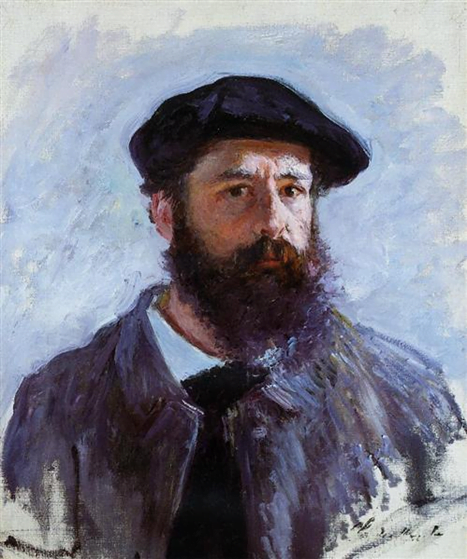
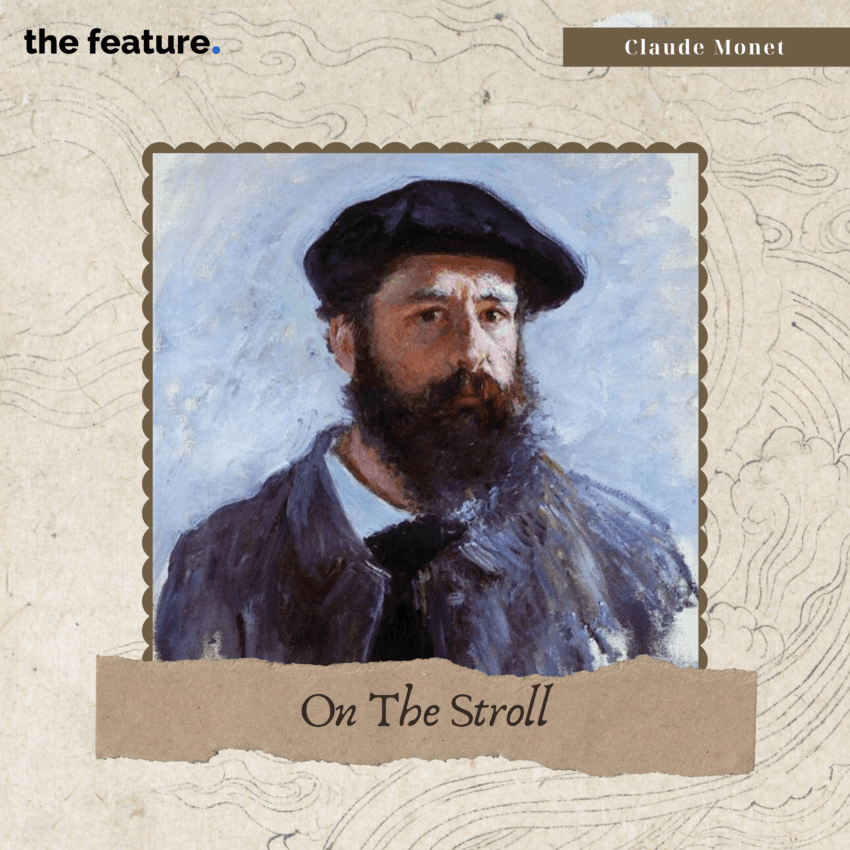
Revered as the father of Impressionism, Claude Monet occupies a pivotal position within the history of the movement, renowned for his mastery of light and his ability to capture fleeting moments in nature. Born in Paris in 1840, Monet’s artistic journey unfolded during a period of significant artistic transformation. His prolific body of work, encompassing oil paintings and drawings, served as a revolutionary departure from traditional landscape painting. Through his innovative use of broken brushstrokes and vibrant colours, Monet sought to capture the essence of light and atmosphere, transforming the act of seeing into an immersive experience. His enduring influence continues to inspire artists and shape our understanding of landscape painting.
Art style:
Claude Monet’s artistic achievements stemmed from his revolutionary approach to light and colour. He rejected traditional techniques of meticulously blended colours and clear outlines, instead pioneering new methods that emphasised the fleeting effects of light. Monet’s signature style is characterised by short, visible brushstrokes applied in pure colours. This technique, known as “optical mixing,” relies on the viewer’s eye to blend the colours, creating a vibrant and dynamic effect on the canvas. Furthermore, Monet was a champion of “plein air” painting, working outdoors to capture the ever-changing interplay of light and shadow on his subjects. This focus on the immediate experience, along with his innovative brushwork and colour theory, solidified Monet’s place as a leading figure in the Impressionist movement.
Notable contribution:
Claude Monet’s greatest and most enduring contribution to art lies in his revolutionary approach to capturing light and its fleeting effects on the natural world. He wasn’t merely interested in depicting landscapes; he sought to translate the ever-changing play of light and shadow into a symphony of colour and form. Monet’s loose brushstrokes and fragmented compositions were a deliberate strategy to evoke the very essence of a scene, dissolving the solidity of form in favour of the shifting spectacle of light. In this way, Monet became a pioneer of Impressionism – a movement that prioritised the perception of light and atmosphere over a detailed portrayal of reality.
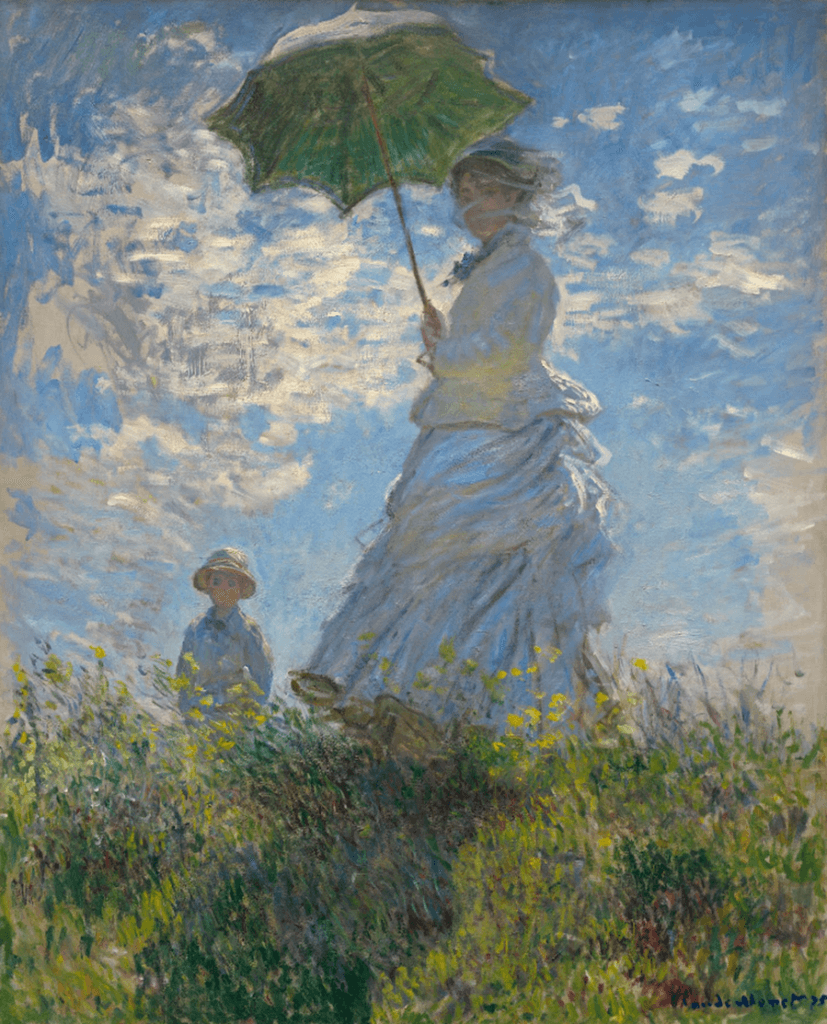
“Woman with a Parasol” is a captivating glimpse into Impressionism, a movement known for its focus on capturing the fleeting effects of light and atmosphere. Claude Monet’s iconic painting portrays his wife Camille Monet and their son Jean in a sun-dappled scene, believed to be their garden in Argenteuil. The scene captures a fleeting moment in time, a casual stroll on a bright day, a testament to Monet’s fascination with the ever-changing play of light. Light and atmosphere reign supreme, creating a hazy, dreamlike quality that evokes a sense of leisure and tranquillity. The parasol, casting a cool shadow over Camille, can be interpreted as a symbol of protection, not just from the physical sun, but perhaps from the harsher realities of the world outside their peaceful garden haven.
Ultimately, the interpretations of art always remain subjective. Each artwork’s essence lies in its ability to elicit unique emotional responses from the viewer. The reality of art resides not on the canvas itself, but within the observer’s interpretation.