
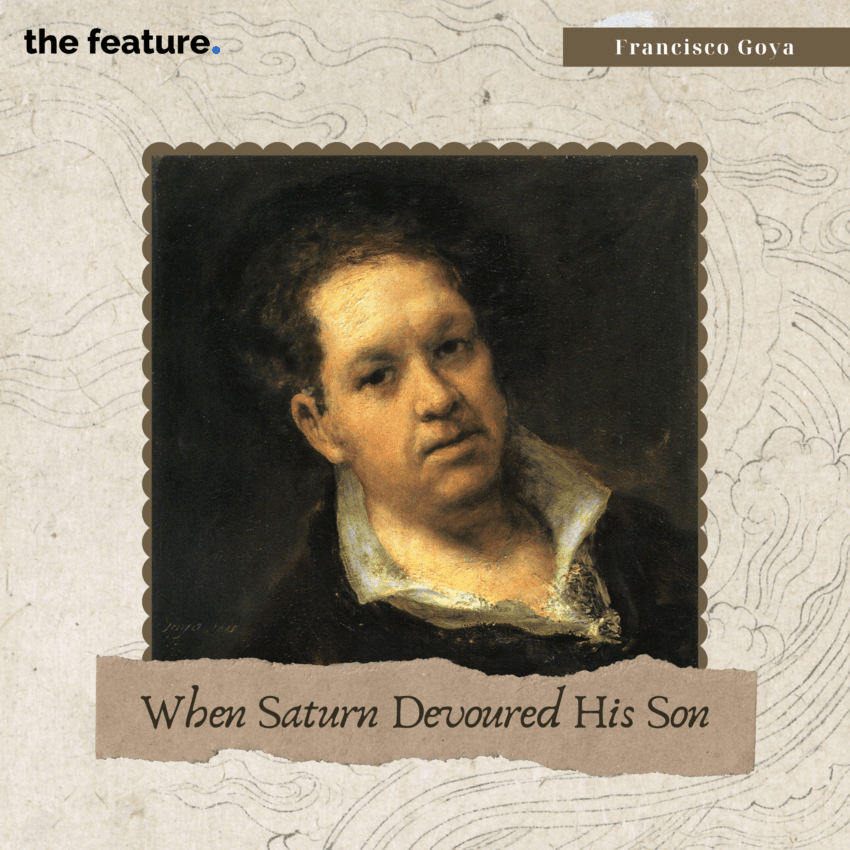
“From vibrant Rococo and Romanticism to disturbing and macabre imagery, perhaps his art was not a mere scathing indictment of the world around him. Perhaps it was a manifestation of his own mental struggles.”
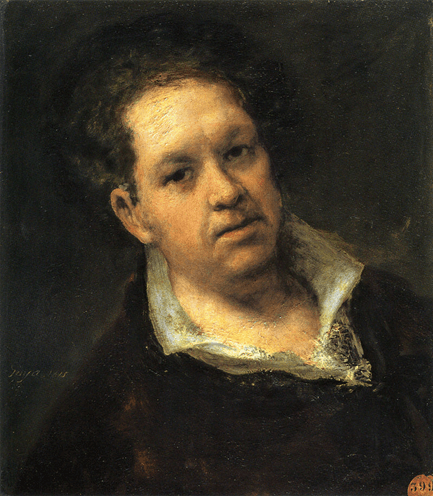
Francisco Goya stands as a giant in the pantheon of Spanish art, renowned for his unflinching portrayal of humanity’s triumphs and tragedies. Born in 1746 in Spain, Goya’s artistic career unfolded against a backdrop of immense historical upheaval. His work, encompassing paintings, drawings, and prints, reflected the complexities of his era with raw honesty and emotional depth. His innovative use of light and shadow, coupled with his willingness to confront uncomfortable truths, established him as a key figure in the Romantic Movement and continues to inspire artists and observers alike. He had developed an illness that caused his deafness. This illness and its impact were very evident from his works, as they got darker and grotesque.
Art style:
Francisco Goya’s artistic style defies easy categorization. He began with the lighthearted flourishes of Rococo, evident in his tapestry cartoons, before transitioning to meticulous Realism in his portraits e.g. The Family of Charles IV. However, the illness that left him profoundly deaf in the late 1790s marked a turning point in his life. His later works, particularly his prints and paintings, embraced a stark Romanticism. They were no longer concerned with mere representation, but with conveying the emotional depths of human experience. This shift often manifested in a fascination with the grotesque and the macabre evident in his work e.g. Saturn Devouring His Son. His innovative use of etching techniques, particularly aquatint, allowed him to create hauntingly realistic scenes filled with grotesque imagery.
Notable contribution:
Goya’s most unique and innovative contribution to art lies in his ability to bridge the gap between beauty and brutality, realism and the macabre. Goya wasn’t merely interested in emotions; he used them as a weapon to expose the injustices and cruelties of his time. It was a deliberate strategy to jolt viewers from complacency and force them to confront the darker aspects of their society. In this sense, Goya was a true humanist – one who believed that true understanding of humanity required confronting not just the nobility, but also the darkness. His art transcended mere aesthetics and became a powerful tool for social commentary.
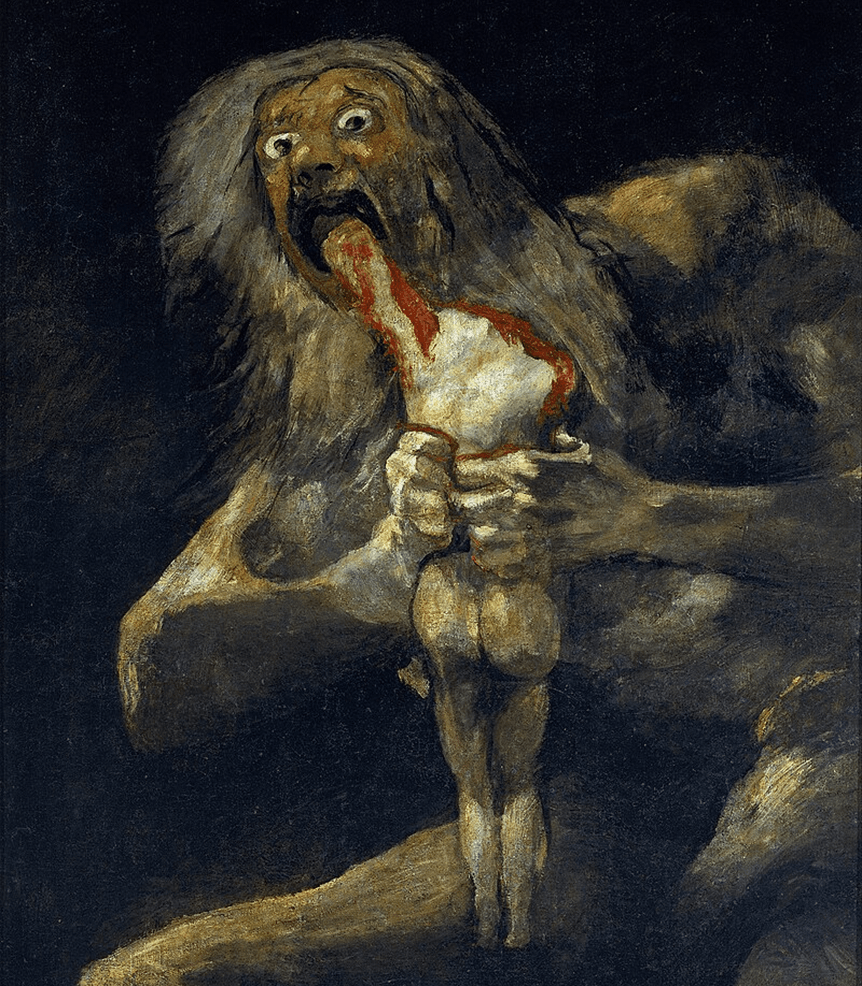
“Saturn Devouring His Son” is a pivotal work of Spanish Romanticism, a genre known for its emotional intensity, but here presented with a disturbing portrayal of the myth of Titan Saturn driven mad by the prophecy that his children would dethrone him – he resorted to consuming them. The painting’s true meaning remains fiercely debated. Perhaps Goya intended it as a scathing indictment of the barbarity that plagued Spain during his lifetime. Alternatively, this grotesque scene might represent a more personal struggle, a descent into a troubled mental state fueled by personal tragedies and a debilitating illness. Goya’s deafness, a consequence of the very illness that coincided with the emergence of his macabre imagery, leaves us with a lingering question: was his art a brutally honest reflection of the world around him, or did it instead become a terrifying manifestation of his own fractured psyche?
Ultimately, these interpretations, however compelling, remain subjective. Each artwork’s essence lies in its ability to elicit unique emotional responses from the viewer. What one perceives as despair, another might interpret as a celebration. Perhaps, the reality of art resides not on the canvas itself, but within the observer’s interpretation.